

|
|
|
|
|
|||||||
| Home | Forums | Gallery | Webcams | Blogs | YouTube Channel | Classifieds | Register | FAQ | Members List | Donate | Today's Posts | Search |
|
|
Thread Tools | Display Modes |
 01-23-2008, 11:15 AM
|
#101 | |
|
Senior Member

Join Date: Jan 2005
Posts: 3,605
Thanks: 223
Thanked 856 Times in 519 Posts
|

Quote:
I agree that the color choice is not the greatest for visibility, that much is true. Your spin on the visibility being bad for over-powered boats is crap, it is poor for all boats. |
|

|
|
01-23-2008, 11:20 AM
|
#102 |
|
Junior Member
Join Date: Jun 2007
Location: Nottingham NH
Posts: 13
Thanks: 0
Thanked 2 Times in 1 Post
|
While i sit here and read the fireworks on each side of the speed limit issue. It sounds like Hilliary and Obama. Can someone out there just say simply that they love the lake for what it is. Beautiful water in a high place.
The best time on the lake is drinking that first cup of coffe on the dock before anyone is out on the water, be it a 4 ton ocean vessel or the guy doing 60 in his bass boat. If you have to go fast to enjoy the lake i feel sorry for those people. If you need a huge show off boat to have fun i feel sorry for those people. I have said before the lake is not what it used to be. As big as the lake is, it gets real small at 70 plus mph. If you can't go fast then maybe you will see that Winnipesaukee is ''Beatiful water in a high place" Maybe we should keep it that way. Is it possible? |
|
|
|
01-23-2008, 11:37 AM
|
#103 | |
|
Senior Member
Join Date: Jan 2005
Posts: 3,605
Thanks: 223
Thanked 856 Times in 519 Posts
|
Quote:
Who are you trying to impress? Touting yourself up like this makes you look rather pathetic in my opinion. Very egotistical. It is simply not necessary and does not bolster your opinion. I am sorry that you had a head injury when young, I truly am. I fractured my skull when I was in 2nd grade. Regardless, what does it matter here? We don't hear you talking so nobody is giving you a hard time about your language skills and you have no problem in your writing skills. The facts are the facts in this case. Studies have been done to prove that the law is not necessary and now the proponents do not really care about enforcement? It is absurd, the whole thing is absurd. |
|
|
|
|
01-23-2008, 02:03 PM
|
#104 | ||
|
Senior Member

Join Date: Mar 2005
Location: Littleton, NH
Posts: 382
Thanks: 0
Thanked 0 Times in 0 Posts
|

Quote:
Quote:
Based on a 10-hour boating day, the 11 weeks in this study add up to 770 hours (10 hours x 11 weeks x 7 days/week), yet speeds were only recording over 135 hours. And that’s a total of 135 MAN HOURS – for all the sample areas combined. If all 9 sample areas were covered equally, speeds were recorded in each area for a total of only 15 hours over the entire summer – which is less than 2% of the daytime boating hours for this 11 week period. 98% of the time, at each of the study sites, speeds of boats were not being recorded at all. And this is assuming that only one officer was present at the time (But the report leads me to believe that two officers were likely present: “In high traffic areas it would be prudent for safety purposes if radar is employed, to have two officers in the vessel, one concentrating on the radar and the other focused on the patrol boat operation and it’s relationship to other vessels.”) If two officers were present all the time, this further reduces the total recorded time to less than 1% of the daylight boating time. So, at best, speeds were recorded during only 2% of the total daylight boating hours. And yet 11 boats were still recorded at speeds of over 50mph. If we assume that this is a fair sampling (as you seem to be suggesting), these 11 boats actually translate into an estimated 539 boats that were traveling at speeds over 50 mph (over the entire 770 total daylight boating hours during the 11 weeks of the study). And that’s just in the sample areas of the lake! What about the rest of the lake? So, based on the study, approximately 539 boats were traveling at speeds over 50 mph last summer – just within just the study area. Isn’t it possible that some of these boats may have not seen a certain sea kayak until they were closer than 150 feet?
__________________
"Boaters love boats . . . Kayakers love water."
|
||
|
|
|
01-23-2008, 02:59 PM
|
#105 | ||||
|
Senior Member
Join Date: Mar 2005
Location: Littleton, NH
Posts: 382
Thanks: 0
Thanked 0 Times in 0 Posts
|
Quote:
 ffice" /> ffice" />I never claimed to be super-human. But I am in great shape (Believe me, you have to be in pretty great shape to compete as a varsity athlete – and I do the exact same workouts and have to pass the exact same fitness tests as the much younger athletes on my team.) Plus I was taught how to paddle correctly, so I use more than just my arms. And I’m 6 feet tall, so I have a pretty long reach. If you don’t believe my paddling abilities, borrow a kayak and come with me some time. That was supposed to read “spatial” awareness – not “special” awareness (I told you that I have language issues. And I'm not allowed to edit my posts, so I can't even correct my error.) I have been tested by experts – more than once. Doctors (and my professors) tell me that my thinking process is very unique. When I tried to explain my differences, you just see it as being egotistical. All I’m trying to do is explain myself here. Believe me, I don’t think that I'm better than other people – but I do know that I’m very different in some basic ways. Most of my life I've just wanted to be normal. Quote:
You guys are constantly questioning my abilities – all I’ve done is try to defend myself. And I’ve been completely honest in what I’ve written concerning my abilities (and in my inabilities). Quote:
It matters because my ability to judge distance, speed, or to remember the details of something visual was questioned here. How is admitting that I have language skills “touting myself up”???? When I wrote that I’m very literal – that was not bragging – it was admitting one of my many shortcomings. It was also an attempt to explain my understanding of what others write in their posts. And you’re very wrong, because I do have major problems writing. Writing is extremely difficult for me. I cannot even think in words, but only in images. At college it takes me more than 3 times as long as the average student to write a paper. Does that sound like I think that I’m perfect? Believe me; I’m not even close to perfect. But I do know that I am very good at some things, and I will continue to stand up for myself when my abilities are questioned. Quote:
I just tried to explain some of the problems with that report. The thing about facts is that you need to also look at the facts that are left out – in order to know the truth. [/quote] I happen to care very much about the enforcement of lake speed limits. So please stop making sweeping generalities about what “the proponents” want.
__________________
"Boaters love boats . . . Kayakers love water."
|
||||
|
|
| Sponsored Links |
|
|
|
01-23-2008, 04:33 PM
|
#106 |
|
Senior Member
Join Date: Jun 2004
Location: Gilford
Posts: 148
Thanks: 0
Thanked 2 Times in 2 Posts
|
Lets just GO HOME
The boating accident in 2002 was just that, an accident. I cause two families a lot of hard ship. The first family lost a loved one, the 2nd lost a father of two and a husband for a long time. Either of which will ever be returned. Why do you have to use it to make your point over something as stupid as this speed limit. You should be a shamed of yourself having to use that reference to make your point. Let the dead lie, and never open old wounds when they have a chance to heal. Over what, a stupid speed limit! What is the big deal with a speed limit, it will be the same as any other speed limit we have for cars, planes, snowmobiles, etc.. There are going to be those that will choose to obey them and those that don't. Have you traveled 93 South lately? Did you know the speed limit is 65 and not 80, everyone does 80. How about on the trials snowmobiling? Its the posted speed or 45 max, I have seen sleds all the time going 60 - 70 on most. Do you really think a speed limit is going to change anything? Think about it. It is a waist of time and effort to be for or against it. It is like anything else there will all ways be something else. If the speed limit passes and the next death related accident is a result of swimming, of which there were two last year. Are you going to call for a ban on swimming? I know lets ban the use of the lake all together, no boating, swimming, rowing, sailing, no nothing GO HOME!
|
|
|
|
01-23-2008, 06:08 PM
|
#107 | |
|
Senior Member
Join Date: Jan 2005
Posts: 3,605
Thanks: 223
Thanked 856 Times in 519 Posts
|
Quote:
The solid fact remains that out of 3852 boats less than 1% were speeding. That is hard to argue. I can spit out hypothesis all afternoon (although I bet MeenMac is already working on it  )as to different calculations and formulas that apply but the main fact still remains. Speed was not an issue. )as to different calculations and formulas that apply but the main fact still remains. Speed was not an issue.The study was done during the busy end of the summer, and clearly was concentrated on busier days of the week and daylight hours. If you have spent as much time on the lake as many of us do this may be easier to comprehend. Show up on a Monday afternoon and what do you get? An empty lake. Rainy days? No traffic at all. You did not add any factor in for bad weather days into your calculations. Chances are the concentration of studies was done during busier times in order to achieve catching 3852 boats on radar. Do you think they zapped every boat that went by? Probably not. Multiple boats going by at the same time cannot all be clocked effectively. My house is right around the corner from Area A so I was able to witness first hand how much they were there and the traffic involved. It is a very busy zone, one of the busiest on the lake which is why it was chosen. So isn't Area B. I am sure they clocked me a few times. There are so many different factors that could be thrown in to this that I am not even touching on. They did their job, give them a break. The results were inconclusive of any speed issue. Feel free to analyze away though! |
|
|
|
|
01-23-2008, 08:14 PM
|
#108 | |
|
Senior Member

Join Date: Apr 2004
Location: Moultonboro, NH
Posts: 2,954
Thanks: 484
Thanked 704 Times in 394 Posts
|
Quote:
You're joking right??? Are you suggesting the only valid study is one that covers the whole lake for the whole summer? 3800+ boats is a pretty significant sample and should give a pretty clear indication of what is happening on the lake. You lost me on your discussion of Man hours. If there were two people on the boat for 135 hours, then that would result in 270 Man hours of labor. Not really relevant unless you want to discuss what the study cost. All your spin, and shaky analysis still doesn't negate the fact that only 1 out of 100 boats was going over 45 mph. Certainly not the "wild west" talked about by speed limit proponents. I'm going to give you a piece of advice that might save your life someday. Quit worrying about boats going over 45 mph, they're not the problem. Keep your eye out for captain bonehead, tooling along at 25 mph in his pontoon boat sipping a martini watching the scenery. While you're straining to see that one speedboat zipping by at 50 mph, captain bonehead might just run you over, he's a much bigger threat and a speed limit won't deter him. But then this isn't really about safety is it. |
|
|
|
|
01-24-2008, 10:00 AM
|
#109 | |
|
Senior Member
Join Date: Mar 2005
Location: Littleton, NH
Posts: 382
Thanks: 0
Thanked 0 Times in 0 Posts
|
Quote:
1.) The data was collected during less than 2% of the daylight boating hours from July 1 to Sept 16th. 98% of the time data was not being collected. 2.) Only a small percentage of the lake was covered in the study. 3.) The study areas were chosen for their high volume of boat traffic - these are areas where high speeds are less likely to occur. 4.) Most of the data was collected on weekends – when traffic is the heaviest. I’ve never said that high-speed boats were the only boats I am concerned about – I’m very alert to all powerboats. But the faster boats have been the ones that have come the closest to running me over, so I see them as being the greatest threat. You can think whatever you like, but safety is MY only concern here. If speed is not an issue here, and so few boats are actually going faster than 45mph on Winni, why are so many of you against this bill? If it won’t affect your boating speeds at all, what’s the problem?
__________________
"Boaters love boats . . . Kayakers love water."
|
|
|
|
|
01-24-2008, 10:53 AM
|
#110 | ||||
|
Senior Member

Join Date: Jan 2005
Location: Florida (Sebring & Keys), Wolfeboro
Posts: 6,028
Thanks: 2,285
Thanked 789 Times in 564 Posts
|
Problem Boats...Problem Boaters
Quote:
Quote:
Quote:
 The far shore (Port Wedeln) is about ¾ to 1-mile away—perhaps a casual 15-minute trip by kayak. At 70-MPH, the same trip in a speeding, excessively-powered boat would take about 35-seconds!  So, which of these views most fairly represents the kayak's size to an ocean-racer speeding at a 70-MPH-clip?  Quote:
A view through binoculars showed that she was singing! If you see a driver speeding at 70+ MPH on Winnipesaukee—and singing—everybody sharing the lake with that boater has a problem.
__________________
Is it "Common Sense" isn't. 
|
||||
|
|
|
01-24-2008, 12:25 PM
|
#111 | |
|
Senior Member
Join Date: Feb 2003
Location: Moultonboro, NH
Posts: 1,692
Blog Entries: 1
Thanks: 356
Thanked 646 Times in 294 Posts
|
The pursuit of happiness
Quote:
The unanimous Declaration of the thirteen united States of America We hold these truths to be self-evident, that all men are created equal, that they are endowed by their Creator with certain unalienable Rights, that among these are Life, Liberty and the pursuit of Happiness. Many people enjoy speed. Owners of bass boaters, jet skis and ocean going craft persue speed as a form of happiness. Take a kid on a high-speed ride and most will return with a happy smile on their face. The problem is that some people are willing to deny others of this right based on fear and anger, not statistics. What right is next to be taken away.
__________________
-lg |
|
|
|
|
01-24-2008, 02:12 PM
|
#112 | |
|
Senior Member

Join Date: Apr 2004
Posts: 1,325
Thanks: 5
Thanked 0 Times in 0 Posts
|
Quote:
__________________
[Assume funny, clever sig is here. Laugh and reflect...  ] ]
|
|
|
|
|
01-24-2008, 02:23 PM
|
#113 |
|
Senior Member
Join Date: Apr 2004
Location: Norwich, CT
Posts: 599
Thanks: 27
Thanked 51 Times in 35 Posts
|
speed/vs rights
I think that everybody's rights can be looked too and safety be taken care of. As one that was in agreement with speed zones, not making no wake zones, but curtailing speed within Alton Bay, Wolfeboro, Weirs and other bays leaving the broads for speed, I think we can do away with the speeding issue if everybody that has a boat would agree to obey the 150' rule and other navigation rules. Plus remember courtesy toward your fellow man goes a long way. If those rules were obeyed by all whether it be a kayak, or a rum runner or anywhere inbetween then we would be having fun and a safer lake.
|
|
|
|
01-24-2008, 04:46 PM
|
#114 | ||||
|
Senior Member
Join Date: Apr 2004
Location: Moultonboro, NH
Posts: 2,954
Thanks: 484
Thanked 704 Times in 394 Posts
|
Quote:
I beg to differ, the study involved a sizeable sample across a broad section of the lake, more than adequate to represent what is really happening on a typical day on the lake. If you were as well versed in statistical sampling as you hint, you would understand this. I can guarantee that if the study showed that there was a problem on the lake you would be swearing up and down that the study was right. If your group's assertion that the lake has turned into the "wild west" was true then I would have expected at least let's say maybe 2 % of the boats to have been travelling more than 45 mph. Actually, from the press and comments posted by WInnfabbs I would have expected to see 30 or 40% of the boats to be traveling faster than 45mph. The study didn't show that because there is not a speed problem. Anyone with an ounce of integrity and actual experience on the lake would have to admit that speeding boats are just not a problem. Quote:
Quote:
From the Citizen: Gallagher said there were two areas chosen for temporary regulation of speed, including the southwest side of Rattlesnake Island, ranging to the main shore, as well as the area between Bear Island and Meredith Neck. He said the reason was because they were long areas with a fair amount of traffic. There also were several other areas surveyed, including Paugus Bay because it is a large area with boats mainly traveling past each other in opposite directions. Others were in Gilford between Governor's Island and Timber Island; Center Harbor; Moultonborough near the east side of Moultonborough Neck; between Cow and Little Bear islands; Tuftonboro Neck; and the end of Alton Bay, the part nearest to the main lake. Quote:
|
||||
|
|
|
01-24-2008, 05:06 PM
|
#115 | |
|
Senior Member

Join Date: Apr 2004
Location: Bear Island
Posts: 1,766
Thanks: 32
Thanked 441 Times in 207 Posts
|
Quote:
Does a speed limit on route 93 violate your Constitutional Rights? |
|
|
|
|
01-24-2008, 06:55 PM
|
#116 | |
|
Senior Member
Join Date: Mar 2005
Location: Littleton, NH
Posts: 382
Thanks: 0
Thanked 0 Times in 0 Posts
|
[quote=ITD;61913]I beg to differ, the study involved a sizeable sample across a broad section of the lake, more than adequate to represent what is really happening on a typical day on the lake. If you were as well versed in statistical sampling as you hint, you would understand this. I can guarantee that if the study showed that there was a problem on the lake you would be swearing up and down that the study was right. If your group's assertion that the lake has turned into the "wild west" was true then I would have expected at least let's say maybe 2 % of the boats to have been travelling more than 45 mph./quote]
First of all, I’m not part of any pro-speed limit group. This is not a conspiracy – I’m simple a NH resident who believes that NH lakes need a reasonable speed limit. And I'm sick of you guys misrepresenting the facts here. For your information, I’ve taken a number of college courses on statistics – including Research Methodology just last semester – so I do know that the accuracy of any data sampling is largely dependant on the percentages involved. In any data collection the number of individuals studied is completely meaningless without knowing the size of the overall population that makes up the study group. The same is true for the time periods involved, and for anything else that might be a factor in a study (like weather, and time of day). The data collected is not considered viable unless it can be determined that it accurately represent the entire study group. And studies of this type are not even considered viable when members of the test population know about the study and the location of the study areas. You and others here try to use the report as magical proof that speed is not an issude. Do you expect anyone to believe that this study accurately determined the boat speeds on the entire lake over the entire summer? There just wasn't enough data collected to make the study viable (since only portions of the lake were covered, and data was collected during less than 2% of the daytime boating season). On top of that, the fact that radar was being used on the lake last summer was well published - along with the location of the study areas. No traffic study is ever considered viable when the public is aware that it is taking place. The report does not even give the statistical analysis of the data collected – if it had, then the percentages would have been factored into the analysis, and the degree of accuracy of the study would have been given. Quote:
How much data was collected out on the Broads?
__________________
"Boaters love boats . . . Kayakers love water."
|
|
|
|
|
01-24-2008, 08:28 PM
|
#117 | |
|
Senior Member
Join Date: Feb 2003
Location: Moultonboro, NH
Posts: 1,692
Blog Entries: 1
Thanks: 356
Thanked 646 Times in 294 Posts
|
Removed rights
Quote:
__________________
-lg |
|
|
|
|
01-24-2008, 09:02 PM
|
#118 |
|
Senior Member

Join Date: Apr 2004
Location: Pitman , NJ
Posts: 627
Thanks: 40
Thanked 21 Times in 12 Posts
|
The most ironic part is the all the people who are calling foul on the results of the test (that was done by professionals) are the same people who would be swearing by it if the results went their way
__________________
Paddle faster , I think I here banjos |
|
|
|
01-24-2008, 09:06 PM
|
#119 | |
|
Senior Member
Join Date: Apr 2004
Location: Bear Island
Posts: 1,766
Thanks: 32
Thanked 441 Times in 207 Posts
|
Quote:
You see the need for highway speed limits, so you rationalize that they don't violate you Constitutional Rights. You don't see the need for boating speed limits so you believe they violate your rights. The issues are EXACTLY the same. The right of the state to set speed limits. You said "as a society, we have decided to evoke speed limits" If the legislature passes HB847 and the Governor signs it into law, then we will have decided, as a society, to invoke boating speed limits. |
|
|
|
|
01-24-2008, 09:16 PM
|
#120 |
|
Senior Member

|
LaDaSun, Thursday Jan 24, 2008
Lawmakers expect to be bombarded with e-mails for another week as House postpones action on boat speed limit bill
By Chris Dornin Golden Dome News top of page 1, Laconia Daily Sun CONCORD - House members will have to endure seven more days of e-mails from both sides of the polarized debate over a proposed 45 mph boat speed limit on Lake Winnipesaukee, with 25 mph at night. If House Bill 847, sponsored by Rep. Jim Pilliod (R-Belmont) becomes law, violations would appear in the speeder's motor vehicle driving record. State reps were bracing for a long and heated floor fight yesterday that never materialized. When House Speaker Terie Norelli (D-Portsmouth) called for discussion of the bill, Rep. Jim Ryan (D-Franklin) asked as chairman of the House Transportation Committee to hold off doing anything until Wednesday, Jan 30. "This afternoon my good friend, the minority leader (Rep. Mike Whalley, R-Alton), asked to postpone the bill due to the unavailability of people to oppose it," Ryan explained. Whalley later explained that Rep. Sherm Packard (R-Londonderry) was absent. Packard, the former chairman of House Transportation, wrote the opposition blurb in the House calender, warning that HB 847 would punish all boat operators for the irresponsible actions of a very few. He also cited a Marine Patrol study this summer showing the legislation was unneeded. Officers clocked 3,852 vessels and caught 83 moving between 41 and 50 mph, eight between 51 and 60, and three between 60 and 62 mph. "A far greater percentage of people disobey our speed limits on our roads,' Packard wrote. "Do we really believe that by passing this law that this small percentage of inconsiderate and irresponsible people will change their habits?" Whalley said most of the citizens he's heard from live on lakefronts, and they generally want to regulate boat speeds. The marina owners have split about evenly, he said. "I pay more attention to what individuals are saying, but I'm not convinced yet there's a problem," Whalley said. One moment made clear how hard the stakeholders are hounding their public servants. Rep. Tony Simon (D-Manchester) went to the podium for a joke on Ryan that drew 10 seconds of laughter and applause. Several people stood up. "Our friend from Franklin has just arranged for all of us to be inundated for another week with emails," Simon said. "I suggest we all forward them to the member from Franklin. He will do a statistical analysis for us." More than a hundred people packed a hearing last spring on a version of the bill that capped the speed on all lakes. Strong feelings emerged on both sides. Sensing an impasse, the Transportation Committee held the bill for further study that led to a crackdown on just the largest lake. That attempt at a compromise left the committee with 7-6 endorsement and strong prospects for a floor battle. Pilliod said he has gotten hundreds of letters and e-mails supporting his bill, and called them well informed and sophistocated. Each was different from the rest. Lawmakers are used to getting identical messages on an issue from different people. "If we can get this to the Senate," he said before the postponement, "they're going to get thousands of e-mails on it. It's not just people who feel threatened by these boats. It's duck and loons. Merrill Faye of Faye's Boatyard (in Gilford) called me to say it's hurting his business. He was bananas about it." Pilliod got a similar bill through the House in 2006 when Republicans controlled the legislature. It died in the Senate. "I've been surprised and pleased to see a lot of Democrats are for it this time," Pilliod said. "It's not just good for people. It's good for the environment." Sandy Helve of Meredith has been orchestrating some of that grassroots stir as president of the Winnipesaukee Family Alliance for Boating Safety, a nonprofit organization claiming thousands of supporters, many of them shorefront homeowners all around the lake. Their allies, she said, include business and marina owners, full-time and summer lake residents, kayakers, anglers, canoeists, sailors, rowers, and children's camp operators. Her people showed up in force to work the corridors outside Representatives Hall. "These fast boats are driving people like us off the lake," Helve said. "I don't care what that study showed. They're going 70, 80, 90 mph when the Marine Patrol is gone, every day of the week, all day and all night. They can't stop in time. A lot of people feel scared and intimidated." Warren Hutchins of the Weirs section of Laconia lives on the lake and serves on Helve's executive committee. He said the group has been digging deep to hold its' own with the commercially funded trade associations. "We began pushing this four years ago," Hutchins said. " The people who can afford these big, high performance cigarette boats are all wealthy. But they're a very small part of all the boaters. Rep. Gene Chandler (R-Bartlett) said the study of speeders weakens the case for a limit. "It showed there's not that much of a problem," Chandler said. Reminded the bill sunsets after three years, he said, "Once something is in, it's hard to get it out." Cosponsors of the bill include Rep. Alida Millham (R-Gilford), Rep. Betsey Patten (R-Moultonboro) and Sen. Joe Kenney (R-Union). ................... Laconia Daily Sun Chris Dornin. Golden Dome News Thursday, Jan 24, 2008 ...................
__________________
 .... Banned for life from local thrift store! .... Banned for life from local thrift store!
Last edited by fatlazyless; 01-25-2008 at 12:02 AM. |
|
|
|
01-24-2008, 09:44 PM
|
#121 | |
|
Senior Member
Join Date: Jun 2004
Location: Gilford
Posts: 148
Thanks: 0
Thanked 2 Times in 2 Posts
|
Are you kidding!
Quote:
|
|
|
|
|
01-25-2008, 01:29 AM
|
#122 | |
|
Senior Member
Join Date: Apr 2004
Location: Bear Island
Posts: 1,766
Thanks: 32
Thanked 441 Times in 207 Posts
|
Quote:
If the study is accurate, and no boats are speeding, then enforcement will not be a problem. Perhaps you should explain that to Woodsy in the other thread. He thinks enforcement will be a huge problem, and cost lots of money. The opposition can't have it both ways. Is there a speeding problem on Winni or not? If there is no speeding problem now, if almost nobody is going over 45, then a speed limit will not inconvenience anyone. If there is a speeding problem now, then I submit we need a speed limit. Anyway the real question about the study is its accuracy. Not who it favors. I think most people on both sides realize the way the data was collected was idiotic. Clearly Woodsy believes enforcement will be extremely difficult, expensive and disruptive to the power boating community. If the study were accurate, how could that be so? |
|
|
|
|
01-25-2008, 08:53 AM
|
#123 | |
|
Senior Member

Join Date: Apr 2004
Location: Bow
Posts: 1,874
Thanks: 521
Thanked 308 Times in 162 Posts
|
Quote:
|
|
|
|
|
01-25-2008, 09:26 AM
|
#124 | |
|
Senior Member

Join Date: Apr 2004
Posts: 5,075
Thanks: 215
Thanked 903 Times in 509 Posts
|
Quote:
__________________
SIKSUKR Last edited by SIKSUKR; 01-25-2008 at 10:18 AM. |
|
|
|
|
01-25-2008, 09:32 AM
|
#125 | |
|
Senior Member
Join Date: Apr 2004
Location: Moultonboro, NH
Posts: 2,954
Thanks: 484
Thanked 704 Times in 394 Posts
|
Quote:
The study proves that you could not have possibly had as many "close calls" with speeding boats as you allude. Especially when you consider how few times you have been on the lake. What more could you possibly need to know about the population of the study that would be relevant? In any study, capturing 2% is a pretty good sample, if we accept the premise that hours of daylight is important, which it isn't......... As far as the accuracy of the study, even though I don't think it is true, let's suppose they missed 50% of the boats that were above 45, that would bump the total from 0.9% to 1.8%, still a very small number, so what????? You keep bombarding us with inaccurate info. only 2 out of 9 areas were published, so you are wrong again. Wrong, wrong, wrong. Common sense, a speed limt isn't going to help you. The only thing that will make you feel safe is a power boat ban, and that isn't going to happen. The world doesn't revolve around you. You should have learned this by now. Show me some data that supports a speed limit, you have none. Just a group of people using scare tactics. Tactics that have been exposed and pretty much admitted or shown as being untrue. When you see some actual data, you try to torpedo that, but you are foiled again.... |
|
|
|
|
01-25-2008, 09:44 AM
|
#126 | |
|
Senior Member
Join Date: Apr 2004
Location: Bear Island
Posts: 1,766
Thanks: 32
Thanked 441 Times in 207 Posts
|
Quote:
However the question is about the constitutionality of setting speed limits, not the practical considerations. |
|
|
|
|
01-25-2008, 09:52 AM
|
#127 | |
|
Senior Member
Join Date: Mar 2005
Location: Littleton, NH
Posts: 382
Thanks: 0
Thanked 0 Times in 0 Posts
|
Quote:
1.) Boats that are traveling at over 15 times as fast as the maximum speed of other boats. 2.) Personally having powerboats come well within my 150 foot zone, because they don't see me in time and are traveling too fast to stay further away. 3.) Knowing that I have less than one second to live, unless a speeding boat is able to avoid hitting me in that last second. 4.) Having friends who won't paddle with me on Winni, because "powerboats goes so fast there." 5.) The fact that Winni isn't even listed in kayak and canoe guidebooks as a lake to paddle on. When people like me have posted of the problems that we have personally experienced on the lake - which are a direct result of high speeds, we are made fun of, called liars, told that we are exagerating, and told that we have unreasonable fears. Apparently you'll only consider speed to be a problem when someone like me is killed by a speeding boat. The problem exists, and everyone knows it. Some people are just too selfish to admit it.
__________________
"Boaters love boats . . . Kayakers love water."
|
|
|
|
|
01-25-2008, 09:58 AM
|
#128 | |
|
Senior Member
Join Date: Jan 2005
Posts: 3,605
Thanks: 223
Thanked 856 Times in 519 Posts
|
Quote:
Woodsy's problem with enforcement is the cost. Who will pay to purchase the new gear? The training? Added manpower? If we are going to take the time to put this law into place then it should be enforced. Laws written with the intent of never being enforced are not worth the paper they are written on. Whether or not there is truly a problem is up to you. The fact remains that it will cost $$$ to patrol and enforce it regardless of if they catch anyone. So, if they patrol for 90 days and do not catch anyone should they simply stop? What will happen then if there was an incident after those 90 days and someone got hurt? Who takes the heat then? MP for not enforcing would be the first target after the parties involved. Maybe then the crosshairs should point to Bear Island for not caring about protecting anyone because they did not care about enforcement and simply wanted a revenge law passed. How can you honestly want this law so bad yet care less that any enforcement takes place??? What is the real motive? I think we already know... |
|
|
|
|
01-25-2008, 10:01 AM
|
#129 |
|
Senior Member
|
Alton Bay hi-speed zone aka 'The Zone'
Reading thru the LaDaSun article gets me thinking about Reps Gene Chandler and Mike Whalley. Chandler used to be the speaker of the house, and Whalley was probably surprised last election when his time as speaker never happened as the house went Democratic majority.
Anyway, Mike Whalley is from Alton, so after HB847 becomes law maybe he could be persuaded to sponsor a new bill that would designate Alton Bay as the designated 'no speed limits area' so's all the go-fasts can cruise over there for a Sunday morning get-together. That's one of the only areas that offers good visibility from the roads, plus the shape of the Bay could act like a megaphone.. Just imagine sitting at Shibley's Bayside for Sunday breakfast, enjoying a bowl of granola with grapefruit juice, and listening to the resounding echo of a triple 600 MerCruiser engines thunder past.....kaboomba...ba...booomba...booomba....boom ! ALTON BAY....way-to-go! Let's all go to Alton Bay for Sunday speed action easily watched from the roadside embankment.....tell Myrtle to pack the picnic basket....and zoom off to Alton Bay by car or by boat. Seriously, after HB847 gets passed, Alton Bay just may be interested in this idea? It's a speedy type of a neighborhood!
__________________
.... Banned for life from local thrift store!
Last edited by fatlazyless; 01-25-2008 at 11:25 AM. |
|
|
|
01-25-2008, 10:12 AM
|
#130 | |
|
Senior Member
Join Date: Apr 2004
Location: Moultonboro, NH
Posts: 2,954
Thanks: 484
Thanked 704 Times in 394 Posts
|
Quote:
I'd be ok with either of those speed limits on the lake: speed of sound over the continental US (+/- 600 mph) or 200 knots in certain airspace near airports. That would be fine for the lake. 200 knots, within sight of Bear Island, and the speed of sound for the rest of the lake.  Any speed limit more restrictive than that is just not necessary..... |
|
|
|
|
01-25-2008, 10:27 AM
|
#131 | |
|
Senior Member
Join Date: Apr 2004
Posts: 5,075
Thanks: 215
Thanked 903 Times in 509 Posts
|
Quote:
__________________
SIKSUKR |
|
|
|
|
01-25-2008, 10:42 AM
|
#132 | |
|
Senior Member
Join Date: Apr 2004
Location: Pitman , NJ
Posts: 627
Thanks: 40
Thanked 21 Times in 12 Posts
|
Quote:
__________________
Paddle faster , I think I here banjos |
|
|
|
|
01-25-2008, 10:51 AM
|
#133 |
|
Senior Member
Join Date: Apr 2004
Location: Fairfield, CT & island vacation
Posts: 97
Thanks: 8
Thanked 0 Times in 0 Posts
|
Maybe the towns could rally the legislation or...
This may be a tad “over the top” but why not encourage technology and the powers that be gather the full extent of information necessary to make a decision on speed limits?
Now I see a major change here, but maybe it is time to change the way we approach situations where peoples’ Rights and citizens’ Wants clash so severely that nary a thing gets accomplished to anyone’s liking  . This may be a large expense, but sometimes it is worth the investment instead of continuing to bandaid the way we think and act. There may even be quite a few jobs created from management to technician. . This may be a large expense, but sometimes it is worth the investment instead of continuing to bandaid the way we think and act. There may even be quite a few jobs created from management to technician. The concept is that the lake is a beautiful public playground for all ages  . There will be a few playground monitors (Marine Patrol craft . There will be a few playground monitors (Marine Patrol craft ) wandering the play area with radio contact to Principal’s office. The Principal will notify a monitor, with all water craft information, when controlling action is required and the monitor will police the situation. ) wandering the play area with radio contact to Principal’s office. The Principal will notify a monitor, with all water craft information, when controlling action is required and the monitor will police the situation.Picture this: 1). EVERY craft on the lake is required to have some sort of RFID (radio freq ID chip) with GPS capabilities. These will be issued via registration through the NH Dept of Safety. – Not impossible. Currently all new automobiles have the technology added to the computer, just not all are purchased “active”. Technology is also used on pet collars. 2). Various locations on mainland and islands to host a receiver station and a line of sight transmitter to a collection station. Collection station operator (manned by the Marine Patrol?) will oversee lake usage of crafts through some sort of Air Traffic Controller program and display (Tom Cruise in Minority Report comes to mind). 3). Lake areas (150 ft off shore) will be designated, on maps (Bizer will be busy) and through transmitters on top of buoys, as areas for “gentle activities” and “rough sports activities”. The open waters of the Broads comes to mind as a sandlot football/rugby field, maybe even the stretch from Rattlesnake Island towards Govenor’s Island (backing off for traffic leaving Gilford Town Dock). The RFID on each craft will read the transmitter from the buoy to further notify the navigator. Now the information collected will be in entirety not just random gatherings in random locations at random times. This will tell everyone just how many craft there are and what speeds they travel, and where the speeds increase and decrease based on operators thought process. And, for those needing to know, it will tell everyone how many kayaks and canoes, large and small are using what kinds of play areas and when they are in use. It will not be able to identify clothing or lack thereof. With all this information collected, now the politicians can agree to mandate what a trained expert may suggest IF a law appears to be required. This is a raw idea and could use tweaking. I see this type of thinking may already be in the near future for cars as California is trying some sort of computer self driving idea with a few cars on a section of highway. Connecticut has wired I-95 and I-91 with fiber optics for their cameras and is capable of, but not doing, monitoring individual car speeds, and like toll booths, mail tickets home to registered offender with picture attached. Last edited by JayDV; 01-26-2008 at 11:32 AM. |
|
|
|
01-25-2008, 11:01 AM
|
#134 | |||||||||||
|
Senior Member
Join Date: Jan 2005
Location: Florida (Sebring & Keys), Wolfeboro
Posts: 6,028
Thanks: 2,285
Thanked 789 Times in 564 Posts
|
Problem-Boaters with Problem-Boats—II
Quote:
Quote:
and... Quote:
and... Quote:
Quote:
and... Quote:
Quote:
and... Quote:
Quote:
and... Quote:
Quote:
__________________
Is it "Common Sense" isn't.
|
|||||||||||
|
|
|
01-25-2008, 11:12 AM
|
#135 | |
|
Senior Member
Join Date: Apr 2004
Location: Bear Island
Posts: 1,766
Thanks: 32
Thanked 441 Times in 207 Posts
|
Quote:
Speed data collected by a clearly marked patrol boat in plain view will be lower than normal. Anybody care to disagree with that statement? How about Skip, he must have some incite into this. |
|
|
|
|
01-25-2008, 11:29 AM
|
#136 | |
|
Senior Member
Join Date: Apr 2004
Location: Moultonboro, NH
Posts: 2,954
Thanks: 484
Thanked 704 Times in 394 Posts
|
Quote:
I don't know what sane political motivation would exist for a public safety official to lie about whether the lake has a speed issue or not. It just doesn't make sense and in fact, if I didn't know better, I'd say it sounds a little paranoid. I see no gain for the guy to lie or manipulate one way or the other. That's what this whole SL campaign has been about, scare tactics, paranoia and exclusion. Time to stop this madness......... |
|
|
|
|
01-25-2008, 11:31 AM
|
#137 |
|
Senior Member
|
No way, no way, no way! Whenever I see a green & bronze state trooper perched behind a snowbank, or the black & white Meredith PD set up on Pleasant St, what I do is to put the pedal to the metal. It's all about reverse psychcology, whatever that means, and doing just the opposite of what is assumed, or something,,,,big words.....sounds impressive! Works for me! Hey, New Hampshire is probably unique from here all the way to Wyoming as being an ' automobile insurance optional' type of a state. What-Me-Worry....I can always pedal a bicycle!

__________________
.... Banned for life from local thrift store!
Last edited by fatlazyless; 01-25-2008 at 10:33 PM. |
|
|
|
01-25-2008, 12:53 PM
|
#138 | |
|
Senior Member
Join Date: Apr 2004
Location: Bear Island
Posts: 1,766
Thanks: 32
Thanked 441 Times in 207 Posts
|
Quote:
It is quite common for public officials to take high paying jobs in the industry they once regulated. |
|
|
|
|
01-25-2008, 01:14 PM
|
#139 | |
|
Senior Member
Join Date: Apr 2004
Posts: 1,325
Thanks: 5
Thanked 0 Times in 0 Posts
|
Quote:
and, yes, some people are just to selfish to admit that a speed limit is not necessary. Why? Because the 150' rule and making yourself visible to others while paddling will cure the [strike]reasons[/strike] excuses for your fears.
__________________
[Assume funny, clever sig is here. Laugh and reflect... ]
|
|
|
|
|
01-25-2008, 02:43 PM
|
#140 | |
|
Senior Member

Join Date: Apr 2004
Location: Dover, NH
Posts: 1,615
Thanks: 256
Thanked 514 Times in 182 Posts
|
 Insightful inciting....inciting insight????
Quote:
|
|
|
|
|
01-25-2008, 02:47 PM
|
#141 |
|
Senior Member

Join Date: Apr 2004
Location: North Shore, MA
Posts: 1,358
Thanks: 996
Thanked 314 Times in 164 Posts
|
New Avatar
Skip,
Greart new avatar! I believe that was an under 45 MPH accident, but with a clearly marked patrol car. R2B |
|
|
|
01-25-2008, 03:25 PM
|
#142 | |
|
Senior Member
Join Date: Mar 2005
Location: Littleton, NH
Posts: 382
Thanks: 0
Thanked 0 Times in 0 Posts
|
Quote:
Let's see, the pro-speedlimit group argues that a speedlimit will make the lake safer for everyone. And the anti-speedlimit group argues that they have a right to go really fast - even when their actions have a negative impact on many other boaters. Which group is more like a spoiled 2-year-old? There is nothing funny about NH residents feeling that their largest lake has become too dangerous to use - because of the high speeds of some powerboats. My kayaking friends are not timid people. If the lake is so safe, why isn't it listed in a single paddling guide? Squam is listed - and so isn't lake Champlain (which is considerably larger than Winni). I have posted (many times) that one of the main reasons that we need a speed limit is that, when they are traveling at high speeds, some operators apparently don’t see smaller boats until they are closer than 150 feet. It is also true that the faster a boat is traveling, the less time the operator has to avoid an object in its path, or to stay outside of the 150 foot limit. For these reasons, I feel that a speed limit will result in a reduction in the number of 150 foot violations, which will make the lake safer for everyone. As far as making myself more visible: My 16 foot sea kayak has a bright red upper hull, a white lower hull, my paddle blades are bright orange, my PFD is red, and my dry top is bright orange. My best friend's kayak is just like mine, only it's upper hull is bright yellow. Yet some high-speed boat operators still break the 150 foot rule before they notice us in time. Speed is the issue here. In good weather, I can usually spot other kayaks when they are a mile away. It's amazing how much more you can see (or notice) when you just slow down. High-speed boaters have even hit islands on Winni - I guess we need to make islands more visible as well.
__________________
"Boaters love boats . . . Kayakers love water."
|
|
|
|
|
01-25-2008, 03:35 PM
|
#143 | |
|
Senior Member

Join Date: Sep 2004
Posts: 1,254
Thanks: 423
Thanked 366 Times in 175 Posts
|
Quote:
As far as your question...it could be turned around to ask if so few boats are speeding then why the need to ask the government to get involved in our lives for something that is only a problem for some. The fast boats are not asking to restrict where the slow boats can go so why do we need to restrict where they can go. If they can't maintain the 150 foot rule from shore and other vessels than we already have laws for that. I would much rather have the MP stopping captain bone head going 15mph at full wake and 75 feet from your kayak with 15 people on board. We see them all day on the island. We call them "Wakus Maximus". We have a law that they are violating 50 foot from my dock and 25 feet from my kids swimming, but the MP is behind the island trying to find the one fast boat in an hour. He is far from shore and making hardly any wake and paying keen attention. I remember the book, what color is your parachute. In this case, what color is your kayak? |
|
|
|
|
01-25-2008, 05:06 PM
|
#144 | |
|
Senior Member
Join Date: Apr 2004
Location: Bear Island
Posts: 1,766
Thanks: 32
Thanked 441 Times in 207 Posts
|
Quote:
ieSpell can't offer me any insite about my spelling deficiencies. |
|
|
|
|
01-25-2008, 10:10 PM
|
#145 | |
|
Senior Member
Join Date: Jan 2005
Posts: 3,605
Thanks: 223
Thanked 856 Times in 519 Posts
|
Quote:
Honestly, what high paying jobs are available in the area that would he could obtain from lobbying for the speed limit bill to be tossed out? If you'd really like me to ask, I will see his daughter and grand daughter tomorrow night 
|
|
|
|
|
01-26-2008, 12:14 AM
|
#146 | |
|
Senior Member
Join Date: Apr 2004
Location: Bear Island
Posts: 1,766
Thanks: 32
Thanked 441 Times in 207 Posts
|
Quote:
It is you that is attributing my answer to a specific person. I am not sure which official you are referring to but assume it to be someone high up in the Marine Patrol or Dept. of Safety. |
|
|
|
|
01-26-2008, 08:35 AM
|
#147 | |||||||
|
Senior Member
Join Date: Jan 2005
Posts: 3,605
Thanks: 223
Thanked 856 Times in 519 Posts
|
Quote:
Quote:
Quote:
Quote:
Quote:
Quote:
Quote:
I think 5 shots from your same IP address speaks loudly enough. |
|||||||
|
|
|
01-26-2008, 08:45 AM
|
#148 | ||||||||||
|
Senior Member
Join Date: Jan 2005
Location: Florida (Sebring & Keys), Wolfeboro
Posts: 6,028
Thanks: 2,285
Thanked 789 Times in 564 Posts
|
Problem Boats with Problem Boaters III
Quote:
Quote:
and... Quote:
Quote:
  and... Quote:
 If you can't see a kayak, can you at least see a kayaker?  Quote:
and... Quote:
and... Quote:
Quote:
and... Quote:
Scream And Fly Extreme Boats Boat Freaks Hot Boat Offshore Only Winnilakers Speed Wake Baja Marine Echoshores Boating ABC Donzi Registry Weekend Pundit NHBassFederation BassResource Sharkey Marine |
||||||||||
|
|
|
01-26-2008, 10:04 AM
|
#149 | |
|
Senior Member
Join Date: Mar 2005
Location: Littleton, NH
Posts: 382
Thanks: 0
Thanked 0 Times in 0 Posts
|
Quote:
There’s nothing funny about NH residents feeling that their largest lake has become too dangerous to boat on. How is supporting a lake speed limit bill being selfish? This bill only requires the fastest boats to slow down to what I and many others consider to be a reasonable speed. It doesn’t ban any type of boat from any part of the lake. Making the lake(s) safer is the reason that most NH residents are in favor of the lake speed limit bill. The “right” to go faster than 45 mph is the main reason against it. I testified at last year’s transportation committee hearing and heard all the testimonies. It was obvious that most those in opposition felt that their “right” to go fast was more important than the safety concerns of others – because it is “fun to go fast”. So which side is acting more like a spoiled two-year-old? My 16-foot sea kayak’s upper hull is bright red, it’s lower hull is white, the blades of my paddle are bright orange, my drytop is bright orange, and my PFD is red. My friend’s kayak has a bright yellow upper hull. I really don’t know how anyone can not see us! Yet some high-speed boaters have not noticed us in time to stay out of our 150 foot zone. The 150 foot rule isn’t protecting us if others are traveling so fast that they don’t notice us in time. Speed is the problem here, not visibility. I don’t have trouble seeing other kayaks – but I’m traveling around 5 mph, not at 60 or 70mph. Here's a video of what 70MPH looks like: http://www.nwfdailynews.com/article/8695 Would this guy be able to see a kayak in time? It is extremely dangerous to continue to allow speeds of 70mph (and faster) on lakes that are used by much smaller, and much slower boats.
__________________
"Boaters love boats . . . Kayakers love water."
|
|
|
|
|
01-26-2008, 10:43 AM
|
#150 |
|
Senior Member
Join Date: Apr 2004
Location: Bear Island
Posts: 1,766
Thanks: 32
Thanked 441 Times in 207 Posts
|
OK... I get it. This is the old "if you can't discredit the message, discredit the messenger" routine we have seen so many times before. I have made several posts recently that have hit home and made sense, so now it's time to throw mud on me.
And as I have not done anything worthy of a mudbath, you blame me for what someone else has posted. I have no idea of the internal workings of the Dept. of Safety. Who thought up the study? Who approved it? You are the one that insists on posting a name. |
|
|
|
01-26-2008, 11:15 AM
|
#151 | |
|
Senior Member
Join Date: Apr 2004
Location: Moultonboro, NH
Posts: 2,954
Thanks: 484
Thanked 704 Times in 394 Posts
|
Quote:
|
|
|
|
|
01-26-2008, 06:26 PM
|
#152 | |
|
Senior Member

Join Date: Jul 2004
Posts: 2,985
Thanks: 246
Thanked 744 Times in 444 Posts
|
Quote:
|
|
|
|
|
01-26-2008, 07:41 PM
|
#153 | |
|
Senior Member
Join Date: Apr 2004
Location: Moultonboro, NH
Posts: 2,954
Thanks: 484
Thanked 704 Times in 394 Posts
|
Quote:
Will you please just try to be even a little right when you write. The "anti-speed limit" crowd has pointed out that the speed limit crowd cannot support their erroneous, scare tactic, trumped up, proven untrue assertions. This is an effort to eliminate a class of boats off the lake. While being trumpeted as a safety issue, data, tests and common sense have shown that a speed limit will not help safety. In fact common sense dictates that a speed limit will divert limited resources away from programs that truly do enhance safety rendering the lake LESS SAFE. |
|
|
|
|
01-26-2008, 09:15 PM
|
#154 | ||
|
Senior Member

Join Date: Sep 2003
Posts: 1,943
Thanks: 23
Thanked 111 Times in 51 Posts
|
 And more hyperbole
Quote:
Quote:
__________________
Mee'n'Mac "Never attribute to malice that which can be explained by simple stupidity or ignorance. The latter are a lot more common than the former." - RAH |
||
|
|
|
01-26-2008, 09:54 PM
|
#155 | |
|
Senior Member
Join Date: Jan 2005
Posts: 3,605
Thanks: 223
Thanked 856 Times in 519 Posts
|
Quote:
As ITD said, own up to it. It is clear what you meant to everyone else here. Why else would you just pull a comment out of thin air like that? No mud was thrown at you, if anything you were the one slinging it towards elected state officials without proof. My post regarding the IP address was merely indicating the exact sentiments from your area of the island. Friend? Neighbor? Family? |
|
|
|
|
01-26-2008, 10:44 PM
|
#156 | |
|
Senior Member
Join Date: Sep 2003
Posts: 1,943
Thanks: 23
Thanked 111 Times in 51 Posts
|
 Survey conditions
Quote:
Where is former director Barrett working these days ?
__________________
Mee'n'Mac "Never attribute to malice that which can be explained by simple stupidity or ignorance. The latter are a lot more common than the former." - RAH |
|
|
|
|
01-26-2008, 10:47 PM
|
#157 |
|
Senior Member
Join Date: Apr 2004
Location: Bear Island
Posts: 1,766
Thanks: 32
Thanked 441 Times in 207 Posts
|
I was answering the question as I was asked. However if the shoe fits...
It's my opinion that the only reason for the study was to delay or derail speed limit legislation. And that those responsible are thereby endangering the lives of the public they are paid to protect. I would like to give those responsible the benefit of the doubt, but it's not easy. It is hard to believe that boating safety professionals could truly think the lake is safer without speed limits. In fact it's almost impossible for me to accept that. |
|
|
|
01-26-2008, 11:05 PM
|
#158 | |
|
Senior Member
Join Date: Sep 2003
Posts: 1,943
Thanks: 23
Thanked 111 Times in 51 Posts
|
Rights and what's right
Quote:
So let's come to speed laws, be they on the lake on on land. What "we" want is reasonable limits should they be needed. It's not a question of rights perse but rather on how much Govt limitation we're willing to accept. That the Govt has the power to impose all manner of restriction doesn't make it "right", it's just that it's the best way we humans have of trying to decide what to do. In talking about reasonable restrictions I have to bring up the old NMSL of 55 mph. Did you ... or pretty much anyone ... agree with that ? I'll guess 'no' given how ignored that law was. Why was that ? I ask this question because the answer goes to the heart of the whole debate. What's a reasonable restriction ? What makes it so ? I maintain that a blanket restriction of 45 mph across all of Winni and at all times is too restrictive and better could be done.
__________________
Mee'n'Mac "Never attribute to malice that which can be explained by simple stupidity or ignorance. The latter are a lot more common than the former." - RAH |
|
|
|
|
01-26-2008, 11:12 PM
|
#159 | |
|
Senior Member
Join Date: Sep 2003
Posts: 1,943
Thanks: 23
Thanked 111 Times in 51 Posts
|
Survey conditions
Quote:
So you don't know the conditions the survey was done under ... other than what was published at the NH govt site.
__________________
Mee'n'Mac "Never attribute to malice that which can be explained by simple stupidity or ignorance. The latter are a lot more common than the former." - RAH |
|
|
|
|
01-26-2008, 11:22 PM
|
#160 | |
|
Senior Member
Join Date: Apr 2004
Location: Bear Island
Posts: 1,766
Thanks: 32
Thanked 441 Times in 207 Posts
|
Quote:
It would have been better if the opposition had come up with a viable compromise or alternative instead of the "No Limits!" stance that is doomed to lose in the long run. |
|
|
|
|
01-26-2008, 11:26 PM
|
#161 | |
|
Senior Member
Join Date: Sep 2003
Posts: 1,943
Thanks: 23
Thanked 111 Times in 51 Posts
|
And why ?
Quote:
Why a HP limit since HP doesn't regulate speed as can be evidenced by PWCs.
__________________
Mee'n'Mac "Never attribute to malice that which can be explained by simple stupidity or ignorance. The latter are a lot more common than the former." - RAH |
|
|
|
|
01-27-2008, 12:14 AM
|
#162 | |
|
Senior Member
Join Date: Apr 2004
Location: Bear Island
Posts: 1,766
Thanks: 32
Thanked 441 Times in 207 Posts
|
Quote:
A horsepower limit does more to address pollution, water quality, and erosion. I posted this last summer. If I had the power to set a "limit" it would preclude boats over 300 hp that where manufactured after 2008. But nobody is asking me. |
|
|
|
|
01-27-2008, 12:35 AM
|
#163 |
|
Senior Member
Join Date: Apr 2004
Location: Pitman , NJ
Posts: 627
Thanks: 40
Thanked 21 Times in 12 Posts
|
To prove a point(or at least try)how rediculous 25/45 is in my own opinion. Ever been out on a moonless night. I did one night from Weirs Beach to the Naswa. Not bad till I passed Naswa then it was like a black hole , 25 mph would be ludicrous. I turned around and headed back to the Naswa were I was staying. So people who want 45 limit on a clear Wednesday afternoon would be willing to allow 25 in pitch darkness
. Sounds to me like they have their head somewhere awfully dark or they're just out there where the bus doesn't stop anymore.I'd be willing to give 10 mph at night for 60 mph in daylight. There you go , I give 15...you give 15...even trade And this , Bear Islander , may have saved your friend in the Wellcraft that fateful night two and a half years ago , regardless of how much alcohol was ingested.  Good night folks Good night folks
__________________
Paddle faster , I think I here banjos |
|
|
|
01-27-2008, 11:33 AM
|
#164 | ||
|
Senior Member
Join Date: Mar 2005
Location: Littleton, NH
Posts: 382
Thanks: 0
Thanked 0 Times in 0 Posts
|
Quote:
Visibility has never been much of a problem for me with slower boats, but it has been a major factor as boats travel at higher speeds. This is because high speed boats are closing the distance between other boats on the lake in less time - and it takes a faster boat longer to stop or the avoid another boat. Those are all facts, and are not hype or exaggeration. Boats have violated my 150 foot zone because they were traveling too fast and didn't see me in time. That's a real issue and one that I feel a speed limit will improve. Quote:
Anyone with any common sense knows that it becomes more dangerous as speeds increase. You now have some boats that are traveling at speeds that are 15 times (or more) faster than other boats on the lake - I (and many others) see this as being very dangerous. You don't. As I've stated many times, I just want boats to slow down - I'm not part of a conspiracy to ban any type of boat from any part of the lake.
__________________
"Boaters love boats . . . Kayakers love water."
|
||
|
|
|
01-27-2008, 11:41 AM
|
#165 |
|
Senior Member

Join Date: Apr 2007
Location: Moultonborough
Posts: 54
Blog Entries: 2
Thanks: 0
Thanked 1 Time in 1 Post
|
Common Sense
Just some thoughts.
Most weekends you can't go over 45 without beating yourself and your boat to death. If you look at the way hiway speed is enforced I would guess you can probably go 60 without a ticket.if the speed limit were 45. If you go out early you can probably go as fast as you want no one is around. I know everyone here is a careful boater who always uses common sense,but Go though Eagle anytime on a weekend.Or take ride up past Arey's on a weekend morning or afternoon when the crowd is going out or coming in, and if you are honest you will admit that most people are too stupid or lazy to follow he rules.If two boats passing each other slow down the third will go right between them.The bigger the boat the less inclined people are to slow down. None of these people are going any near 45 and are dangerous enough.Now people on this forum want to make sure you can go 60 down Meredith bay on SAT afternoon or up Between Bear and Meredith Neck.Sixty would be legal now as long as you are 150' from another boat.Is it safe?I know none of you guys would do this but some one will,they do now.You are all talking a lot about Kayaks,what about small fishing boats,kids in whalers there are lots of small boats on the lake. I don't want to see a speed limit on the Lake but more and more people keep coming,just like you have to slow down in a town on the road you are going to have to slow down on the lake.If people only went fast out in the Broads with no one around this would not be an issue.Like some one once said."Common sense aren't too common" |
|
|
|
01-27-2008, 01:24 PM
|
#166 |
|
Senior Member

Join Date: Oct 2007
Location: Bear Island/Fort Myers, Fla
Posts: 231
Blog Entries: 1
Thanks: 1
Thanked 59 Times in 41 Posts
|
Safety and enjoyment of the Lake is the Issue
While I have only owned a place on Bear Island for a year, I have been coming to the lake for almost 40 years. Not much has changed except there are a lot more people. Boat owners have been building more powerful and faster boats since the days of the steam ships, and that will continue. Fishermen and others will still be in smaller boats for enjoyment of the more secluded and shallow areas. Someone will want to see how fast they can go down the broads in a speed boat.
While I am not an advocate of government involvement in any part of my life, a seed limit on some parts of the lake may be a good idea, along with a ban on kayaks canoes and other small boats on other parts of the lake. Small non power boats should be restricted to 150' from shore period. They have no ability to avoid a collision and are in danger any time the leave the shoreline. Face it, lake Winnipesaukee is a big lake and is not paddler friendly which is why it is not a favorite of paddlers. There is nothing fun about kayaking in the broads or in the middle of the area between Bear and Browns yet we see this happening. I could go on about the night I came back at 10:30PM from Brown"s to find a canoe passing in front of my boat house with no lights to other stories. In summary my proposal. 1 Speed limits on entire lake except the broads from Becky's Garden to Rattlesnake. 2. Ban non motorized vessels from all areas other than within 150 feet of shore. Most of the lake will be speed limited, paddlers will be safe. and go fasts can get their thrills! Every interest involved gives up something and gets something. A winner for all! O yea you all should be nicer to each other some of these post are getting a little personal!!! |
|
|
|
01-27-2008, 01:49 PM
|
#167 | |
|
Senior Member
Join Date: Apr 2004
Location: Bear Island
Posts: 1,766
Thanks: 32
Thanked 441 Times in 207 Posts
|
Quote:
Second, you need to think about your idea some more. Do you realize your idea restricts sailboats to 150' from shore? And if a buy another canoe, how do I get it to the island? If you are going to restrict small boats shouldn't you also restrict swimmers to 150' from shore, they have even less visibility and capability to get out of the way. Plus it seems obvious to me that if powered boats and unpowered boats can't co-exist in an area, it is the powered boat that needs to go. And have you considered the impact of your idea on children's camps? |
|
|
|
|
01-27-2008, 02:07 PM
|
#168 | |
|
Senior Member
Join Date: Oct 2007
Location: Bear Island/Fort Myers, Fla
Posts: 231
Blog Entries: 1
Thanks: 1
Thanked 59 Times in 41 Posts
|
Quote:
|
|
|
|
|
01-27-2008, 02:13 PM
|
#169 | |
|
Senior Member
Join Date: Apr 2004
Posts: 1,325
Thanks: 5
Thanked 0 Times in 0 Posts
|
Quote:
After all, this is a family oriented Forum.
__________________
[Assume funny, clever sig is here. Laugh and reflect... ]
|
|
|
|
|
01-27-2008, 02:42 PM
|
#170 | |
|
Senior Member
Join Date: Apr 2004
Location: Bear Island
Posts: 1,766
Thanks: 32
Thanked 441 Times in 207 Posts
|
Quote:
|
|
|
|
|
01-27-2008, 04:08 PM
|
#171 | ||
|
Senior Member
Join Date: Mar 2005
Location: Littleton, NH
Posts: 382
Thanks: 0
Thanked 0 Times in 0 Posts
|
Quote:
Just like others on this forum, you’re lumping all paddle boats and paddlers together. That’s like saying that all boats with a motor are equally sea worthy. A sea kayak is very different from a recreational kayak – they are long and narrow, with a very small cockpit, with thigh braces. You sit in a recreational kayak, but you wear a sea kayak. Sea kayaks are designed for large bodies of water, and most sea kayakers have no trouble handling fairly large waves. My sea kayak even has a rudder, which I steer with my feet. And I happen to enjoy paddling in large waves and swells. Believe it or not, my sea kayak can handle conditions that would be too rough for many small powerboats. And my sea kayak is powered – by me. What happens when a power boat’s motor dies? I even carry an extra paddle. And I can do self rescues. I also carry a bilge pump, and use a spray skirt in rough weather. I don’t kayak at night, but if a paddler is out on the water at night their boat is required by law to have a 360 degree light. Quote:
__________________
"Boaters love boats . . . Kayakers love water."
|
||
|
|
|
01-27-2008, 05:32 PM
|
#172 | |
|
Senior Member
Join Date: Apr 2004
Location: Pitman , NJ
Posts: 627
Thanks: 40
Thanked 21 Times in 12 Posts
|
Quote:
I've seen the inlet deal you mentioned also. Kinda like riding a bike on an interstate , but then again there are restrictions for than
__________________
Paddle faster , I think I here banjos |
|
|
|
|
01-27-2008, 05:56 PM
|
#173 | |
|
Senior Member
Join Date: Oct 2007
Location: Bear Island/Fort Myers, Fla
Posts: 231
Blog Entries: 1
Thanks: 1
Thanked 59 Times in 41 Posts
|
Quote:
|
|
|
|
|
01-27-2008, 06:27 PM
|
#174 |
|
Senior Member
|
What about me and my fleet of dirt cheap, little, fixer-upper boats? For prices like $100, 300, 250, 550, 150, 100 & 700 , I have a collection of three kayaks, one rowboat, one canoe, and two sailboats, and none even need to be registered, and are covered by the standard deluxe homeowners insurance as long as there's no engine or motor.
In the past ten years, there's been a big increase in the number of kayaks on Lake Winnipesaukee. Used to be I'd see an occaisional canoe with two paddlers. Now, it is very common to see kayakers crossing from Timber Island and across the three miles of open water to Horse Island enroute to either the Cattle Landing public dock and parking lot, or enroute to Lovejoy Sand's public parking lot & dock or on up to Center Harbor, somewhere. I'm seeing trains of kayaks out in the middle of the area between buoy 3 and Governor's Island pretty often, where in the past, this was a very rare occurance. Probably, the kayak's popularity is due to its' low cost, inherent safety & stability as compared to a canoe, ease of use, light weight ease to cartop, no need for a trailer, no need for a registration, aerobic paddling exercise, and all-around fun to use. Also, no expensive gasoline needed. Kayaks are truly a boat for everyone and can be purchased at some pretty low prices, at garage sales & stuff. Last October, I got myself a ten year old, 16' Aqua Terra made out of polypropelene for the low low, end-of-season, garage sale price of just $250, and am looking forward to paddling it over to the Naswa for an adult beverage. Does the Naswa NazBar still have a one dollar/drink, happy hour.....like in the the olde daze? Having seen plenty of overweight "go-fast, bolster boys" climb out of their well-padded and very expensive go-fasts over at the Meredith Town Docks, it's obvious that lots of you guys could benefit from the physical exercise of paddling a kayak. Maybe you want to give a kayak a try. Lose the fat, paddle a kayak, get a wicked sunburn, and pack along some granola, too!  
__________________
.... Banned for life from local thrift store!
Last edited by fatlazyless; 01-30-2008 at 05:07 PM. |
|
|
|
01-27-2008, 06:38 PM
|
#175 |
|
Member
Join Date: Jul 2005
Location: Lakes region NH
Posts: 48
Thanks: 0
Thanked 0 Times in 0 Posts
|
All this talk about the Kayaks makes me wounder ?? I'm ask in a serious manner here
Why do kayaks need or want to be out beyond the 150 feet we are talking about...I don't kayak but when I think about it I think about going up small rivers and into back coves where there are less people and quiet... or hanging close to shore ( again Not alot of boats there) watching people waveing to the guy cooking something on the grill or saying hi to the family laying on the dock catching a few rays or looking into there yards to see things I wouldn't see in my bayline cruzing around..... A kayak is a stealth mode of transportation less intrucive than any other boats..... That being said I don't think anyone wants to see a 24 foot plus boat of any type trolling less than 150 feet from shore..but yet it's funny how nobody seems to bother or mind the guy in his GFBL bass boat when he's trolling around on his electric trolling motor stealing fish from under the dock or from around the boat house...... I have seen the light we all need electric boats!!!! |
|
|
|
01-27-2008, 07:04 PM
|
#176 |
|
Senior Member
Join Date: Apr 2004
Location: Bear Island
Posts: 1,766
Thanks: 32
Thanked 441 Times in 207 Posts
|
It makes me laugh out-loud when it's suggested that I support speed limits because I hate speed or powerboats. I hate powerboats so much I moved to an island. I have owned several. I ride PWC's in a way that makes my neighbors question my sanity. I rent them now instead of owning because I keep breaking them.
I hate speed so much that last Tuesday I rode a centrifuge up to 6 gravities, an incredible ride! I did that as part of my training to ride a rocket at 3,000 miles per hour. Yeah... I hate speed! |
|
|
|
01-27-2008, 09:16 PM
|
#177 | |
|
Senior Member
Join Date: Oct 2007
Location: Bear Island/Fort Myers, Fla
Posts: 231
Blog Entries: 1
Thanks: 1
Thanked 59 Times in 41 Posts
|
Quote:
|
|
|
|
|
01-27-2008, 09:35 PM
|
#178 | |
|
Senior Member
Join Date: Oct 2007
Location: Bear Island/Fort Myers, Fla
Posts: 231
Blog Entries: 1
Thanks: 1
Thanked 59 Times in 41 Posts
|
Quote:
|
|
|
|
|
01-27-2008, 09:47 PM
|
#179 | |
|
Senior Member
Join Date: Apr 2004
Posts: 1,325
Thanks: 5
Thanked 0 Times in 0 Posts
|
Quote:
(2 miles + 1 + 1) x (1 mile + 1 + 1) = 12 sq miles What happened to the other 60 sq miles of the Lake? Not good enough for you? Great! Then there is no need for a speed limit on the 60 sq miles of the Lake that you prefer not to use.
__________________
[Assume funny, clever sig is here. Laugh and reflect... ]
|
|
|
|
|
01-28-2008, 12:08 AM
|
#180 | ||||
|
Senior Member
Join Date: Mar 2005
Location: Littleton, NH
Posts: 382
Thanks: 0
Thanked 0 Times in 0 Posts
|
Quote:
Quote:
In good weather conditions I can spot most other kayaks as far as a mile away. The most visible part of a kayak are the blades of the paddles – because they are moving up and down. The blades of my paddle are bright orange. Since my friend has a dark paddle, she has attached white reflective tape to hers, which makes them very visible. It has been my experience that anyone who is paying attention and is traveling at a reasonable speed seems to be able to spot us pretty easily and does not seem to have any trouble keeping out of our 150 foot zone. Unless your eyesight is really poor, you would not have any trouble spotting us at 25mph. (When visibility is low, due to the weather, we try to stay near the shore.) Quote:
Quote:
__________________
"Boaters love boats . . . Kayakers love water."
|
||||
|
|
|
01-28-2008, 01:13 AM
|
#181 | |
|
Senior Member
Join Date: Apr 2004
Posts: 1,325
Thanks: 5
Thanked 0 Times in 0 Posts
|
Quote:
So, besides soil yourself, what exactly do you plan to do in 1.8 seconds to save your life, that is?
__________________
[Assume funny, clever sig is here. Laugh and reflect... ]
|
|
|
|
|
01-28-2008, 10:59 AM
|
#182 | ||||||||||
|
Senior Member
Join Date: Jan 2005
Location: Florida (Sebring & Keys), Wolfeboro
Posts: 6,028
Thanks: 2,285
Thanked 789 Times in 564 Posts
|
Problem-Boaters with Problem Boats IV
Quote:
 Quote:
However, one violator that I reported to the MPs was going somewhere between double and triple that number. The [strike] captain [/strike] driver turned out to be a VERY wealthy Tuftonboro neighbor. Another [strike] captain[/strike] driver makes gas trips two/three times a day and goes past me at about 60-MPH. He's really easy to spot because he always trails his stern docking line—and leaves his boarding ladder down! Quote:
Quote:
Quote:
Quote:
Quote:
Static: Red-pencil the Graveyard, the Witches, Middle Ground Shoals, all other shoal waters: add No-Wake-Zones, a 150' border around all mainland shorelines, a 150' border around all 253 islands, and the lake shrinks—a lot. Dynamic: Subtract each speeder's Acres/Second coefficient and "Safe Passage" margins, and there's not much left of the lake to enable reckless speeds. Quote:
Quote:
For real physical exercise, try breaking the night speed limit with one of these:  Quote:
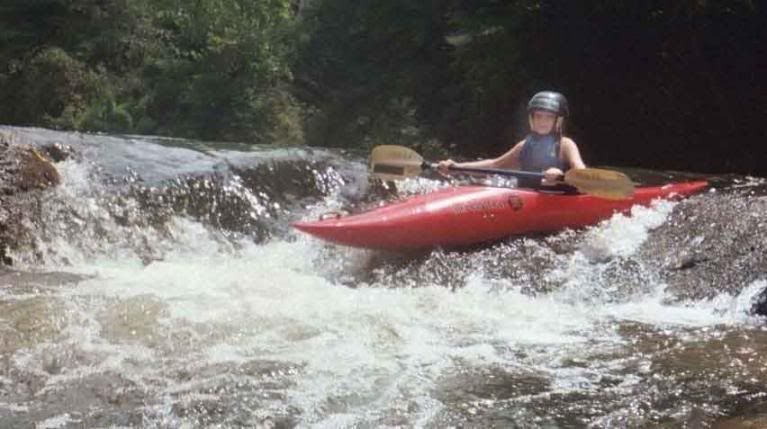
__________________
Is it "Common Sense" isn't.
|
||||||||||
|
|
|
01-28-2008, 11:45 AM
|
#183 | |
|
Senior Member
Join Date: Oct 2007
Location: Bear Island/Fort Myers, Fla
Posts: 231
Blog Entries: 1
Thanks: 1
Thanked 59 Times in 41 Posts
|
Quote:
|
|
|
|
|
01-28-2008, 12:18 PM
|
#184 |
|
Senior Member
Join Date: Sep 2004
Posts: 1,254
Thanks: 423
Thanked 366 Times in 175 Posts
|
If you rely on your blades for us to see you please be sure to go in circles so we can see you from every direction. Also, please never stop paddling as we won't see your blades at rest on the water surface.
Bright paddles do make you more visible but probably should be only part of your visibility strategy. We want to see you. It makes our experience much more enjoyable and safe as well. |
|
|
|
01-28-2008, 02:06 PM
|
#185 | |
|
Senior Member
Join Date: Apr 2004
Location: Moultonboro, NH
Posts: 2,954
Thanks: 484
Thanked 704 Times in 394 Posts
|
Quote:
Maybe his true screen name would be svelt assiduous rich (yes I used a dictionary) |
|
|
|
|
01-28-2008, 02:28 PM
|
#186 | |||
|
Senior Member
Join Date: Apr 2004
Posts: 1,325
Thanks: 5
Thanked 0 Times in 0 Posts
|
Quote:
Quote:
The rule is called the 150’ rule! 70 mph = (70 x 5280’) = 369600’ in 1 hour = 102.67’ per second 45 mph = (45 x 5280’) = 237600’ in 1 hour = 66’ per second 150’ / 102.67’ per second = 1.46 seconds (70 mph) 150’ / 66’ per second = 2.27 seconds (45 mph) 2.27 – 1.46 = .81 seconds (safety factor difference between 70 mph and 45 mph vessel at 150’) If 2 seconds are necessary mental time for avoidance decision, kayaker has .27 of a second (2.27 - 2) to paddle if approaching vessel is traveling at 45 mph. This is the safety factor provided by the proposed speed limit. Quote:
8.8’ x .27 seconds = 2.38’ (represents distance in straight line from time mind determines it is necessary for evasive action on current heading and does not allow any time to change course)
__________________
[Assume funny, clever sig is here. Laugh and reflect... ]
|
|||
|
|
|
01-28-2008, 03:16 PM
|
#187 | ||||
|
Senior Member
Join Date: Mar 2005
Location: Littleton, NH
Posts: 382
Thanks: 0
Thanked 0 Times in 0 Posts
|
Quote:
First of all, I do know what 2 square miles is. My point (since you obviously didn’t get it) was that, even though Winnipesaukee is a large lake, there’s only a very small part of it where you can ever be more than a mile from shore. I never said (or even implied) that the only part suitable for sea kayaks was the portion that was over a mile from shore – my point was exactly the opposite – that the lake is very suitable for kayaks, since 98% of it is within a mile of shore (where I’m never more than 12 minutes from shore). The only portion that I would personally consider to be “off-shore” is the part that is more than a mile from shore (which is less than 2 square miles). Here’s a link to an image, where I’ve marked this “off-shore” portion of the lake: http://img165.imageshack.us/img165/9...lelimitkw1.jpg Now please get off my case! Quote:
I only used 300 feet, as that’s roughly when I would feel that a boat that is still heading directly at me doesn’t see me. (Although some idiots think that heading directly at a kayak at is funny.) Since my maximum speed is 6mph, that addition 1.8 seconds means that I’ll be able to paddle an additional 16 feet – which could easily be enough to avoid being run over. With a 70mph powerboat, I really don’t have a chance. With a 45mph powerboat, I have a chance of getting out of the way. This is what makes speed a major issue for me. Quote:
Quote:
__________________
"Boaters love boats . . . Kayakers love water."
|
||||
|
|
|
01-28-2008, 03:57 PM
|
#188 |
|
Senior Member
Join Date: Jul 2004
Posts: 2,985
Thanks: 246
Thanked 744 Times in 444 Posts
|
I am still trying to figure out why people think kayaks are difficult to see in daylight. I think they are incredibly easy to spot. If one can spot spars (a necessary skill on this lake), a kayak is a piece of cake to spot. Maybe that's why NONE have ever been hit in daylight in NH. If one kayaker can spot another a mile away from that low on the water, imagine how easy it is for someone in a boat with at least 4 times the freeboard.
|
|
|
|
01-28-2008, 04:48 PM
|
#189 |
|
Senior Member
Join Date: Apr 2004
Location: Bear Island
Posts: 1,766
Thanks: 32
Thanked 441 Times in 207 Posts
|
I still can't figure out why kayaks should be outlawed because they might get run over by boats.
If you can't see a kayak in the daytime, don't take the helm. If you can't spot a kayak, how can you spot a swimmer? Or is swimming in the lake to be outlawed now. |
|
|
|
01-28-2008, 04:57 PM
|
#190 | |
|
Senior Member
Join Date: Apr 2004
Location: Moultonboro, NH
Posts: 2,954
Thanks: 484
Thanked 704 Times in 394 Posts
|
Quote:
Unfortunately COMMON SENSE is in short supply, thanks for sharing some with us. |
|
|
|
|
01-29-2008, 11:38 AM
|
#191 | |||||
|
Senior Member
Join Date: Jan 2005
Location: Florida (Sebring & Keys), Wolfeboro
Posts: 6,028
Thanks: 2,285
Thanked 789 Times in 564 Posts
|
Problem-Boaters with Problem Boats VI
Quote:
1) The right to smoke cigars in restaurants 2) The right to skim a snowmobile 3) The right to refuse seat belts 4) The right to refuse PFDs for their children Quote:
Quote:
To whit: 1) "...Down here the coast guard or marine police catch you in a channel or boatway in a kayak you get a ticket for unsafe operation of a vessel..." 2) "...Kayaker"s are often in places that they should not be. We see it all the time on Barnegat bay here in New Jersey..." 3) I've seen the inlet deal you mentioned also. Kinda like riding a bike on an interstate..." Smith Mountain Lake was a double for Lake Winnipesaukee for a movie—yet their double-fatality is challenged as "not on Winnipesaukee". (Yet Maine's Long Lake double-fatality was, what, forty miles away?) Quote:
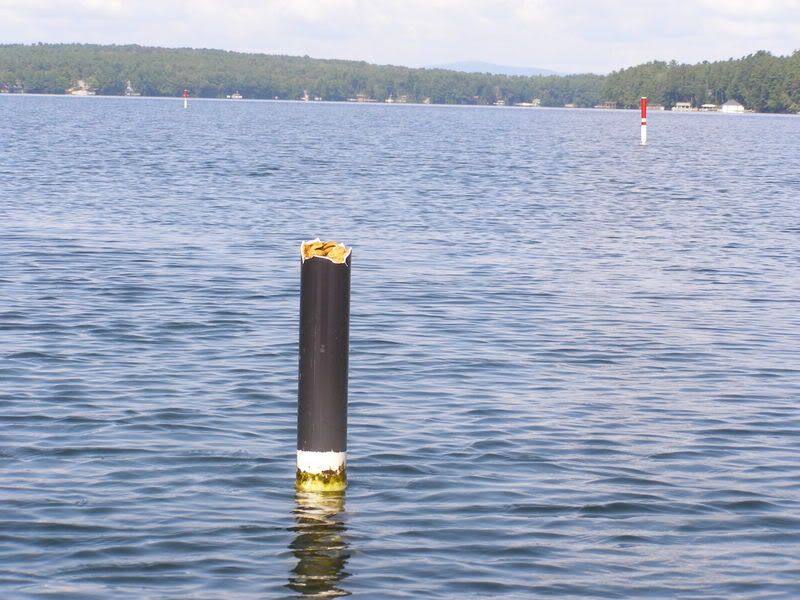 Quote:
 (Had Evenstar been in the photo, she'd have been in that lone sailboat—center foreground).
__________________
Is it "Common Sense" isn't.
|
|||||
|
|
|
01-29-2008, 02:33 PM
|
#192 | |
|
Senior Member
Join Date: Apr 2004
Posts: 5,075
Thanks: 215
Thanked 903 Times in 509 Posts
|
Quote:
__________________
SIKSUKR |
|
|
|
|
01-29-2008, 03:06 PM
|
#193 |
|
Senior Member
Join Date: Apr 2004
Location: Bear Island
Posts: 1,766
Thanks: 32
Thanked 441 Times in 207 Posts
|
There are many things that are a bad idea, but not illegal.
There are many reasons why a swimmer can be in the water far from shore. They may have fallen of the Mount Washington, or other boat. They may have had their boat sink from under them. It could be a SCUBA diver on the surface. It could even be an irresponsible idiot availing himself of his legal right to swim across Winni un-escorted. And if you run over any of them you better call an attorney real quick. |
|
|
|
01-29-2008, 03:47 PM
|
#194 | |
|
Senior Member
Join Date: Apr 2004
Location: NH
Posts: 2,689
Thanks: 33
Thanked 439 Times in 249 Posts
|
Quote:
|
|
|
|
|
01-30-2008, 10:42 AM
|
#195 | ||
|
Senior Member
Join Date: Jan 2005
Location: Florida (Sebring & Keys), Wolfeboro
Posts: 6,028
Thanks: 2,285
Thanked 789 Times in 564 Posts
|
It's Science...
Quote:
The human female retina is amply and evenly filled for color detection. Women have the ability to detect colors better. This is likely an evolutionary adaptation from earliest human's seeking berries and other food gathering needs. Men have fewer of those color-detecting "cones" in their vision and those are all located in the center of their retinas. Overall, the male retina is biased towards black-and-white detectors—called "rods"—which are particularly dense in mens' vision outside of center. "Rods" are smaller, and can be packed more tightly and in larger numbers onto the retina. This is of special impact to those who crave extreme speeds for the following reasons: 1) Peripheral vision is enhanced for movement with only black-and-white vision. (An evolutionary benefit for the stalking hunter-male). 2) Once a kayak gets out of dead-center of the male's vision at high speed, it doesn't matter what color the kayak is. 3) At high speeds, peripheral vision becomes blurry or, at advanced high speeds, lost altogether. The retina-center that detects color becomes much smaller for the operator. The effect is called tunnel-vision, or funnel-vision. The effect is like peering through a long pipe with a very shiny interior. At very high illegal speeds on the highway, a driver will overlook the patrolman sitting in the median! In the extreme, such as the centrifuge mentioned previously, one's vision can go black even while the participant is fully conscious. Perhaps Bear Islander has been made aware of this. Women would see kayaks best; unfortunately, most boaters with the excessive speed imbalance are compensating men. Quote:
__________________
Is it "Common Sense" isn't.
|
||
|
|
|
01-30-2008, 01:57 PM
|
#196 | |
|
Senior Member
Join Date: Apr 2004
Posts: 5,075
Thanks: 215
Thanked 903 Times in 509 Posts
|
Quote:
__________________
SIKSUKR |
|
|
|
|
01-30-2008, 02:40 PM
|
#197 |
|
Senior Member
Join Date: Apr 2004
Location: Bear Island
Posts: 1,766
Thanks: 32
Thanked 441 Times in 207 Posts
|
Pedestrians are not allowed on highways. And double murder with suicide is against the law everywhere. Swimming across the lake is legal.
Common sense and good judgment argue against swimming far from shore. The LAW requires the boater to keep a proper lookout. |
|
|
|
01-30-2008, 03:09 PM
|
#198 | ||
|
Senior Member
Join Date: Mar 2005
Location: Littleton, NH
Posts: 382
Thanks: 0
Thanked 0 Times in 0 Posts
|
Quote:
Others feel like we are putting ourselves at risk if we venture more than 150 feet from shore. They believe that kayaks have no business going out on the main lake. For instance: Quote:
You may view a lake speed limit law as the result of over reacting - I view it as self-preservation.
__________________
"Boaters love boats . . . Kayakers love water."
|
||
|
|
|
01-30-2008, 03:46 PM
|
#199 |
|
Senior Member
Join Date: May 2004
Location: Weirs Beach
Posts: 1,974
Thanks: 80
Thanked 984 Times in 443 Posts
|
Bear Islander...
I think Siksukr used a bad analogy... however the point remains that the LAW requires the operator of ANY vehicle, car, truck, boat, pwc, bicycle, kayak, etc to keep a proper lookout for potential hazard. Perhaps a better analogy would be your impending (hopefully) space flight. Using your own logic, I could argue that civilian "tourist" spaceflight should be banned. Flying to the edge of space as a passenger on a rocket doesn't make you an astronaut any more than flying at Mach 2 on the Concorde makes you a fighter pilot. Why should a bunch of wealthy thrill seekers (it cost $200,000 per ride for approx 4 minutes of weightlessness) be allowed to outrageously pollute the atmosphere and quite possibly scatter toxic debris over hundreds of square miles just to satisfy thier inner adrenaline junkie? What/whom gives them the right? (Oh wait... its not a right, but a personal freedom!) Spaceflight is obviously fraught with peril to you, others flying with you and to people on the ground. There have been many people killed. One just has to look at the fateful mission of STS-107 Columbia (foam failure on launch), or the explosion they had over at Scaled Composites (Burt Rutan's Co.) that killed 3 people while doing testing of the Virgin Galactic rocket's nitrous/solid fuel propulsion system. This project hasn't flown yet and it is already killing people! Woodsy PS: I am just pointing out the flawed logic that Bear Islander is using to justify HB-847 and applying that same logic to ban something that he wants to do. I think civilian spaceflight is a great idea (environmental concerns aside)and I am all for it.
__________________
The only way to eliminate ignorant behavior is through education. You can't fix stupid. |
|
|
|
01-30-2008, 04:57 PM
|
#200 | |
|
Senior Member
Join Date: Apr 2004
Location: Bear Island
Posts: 1,766
Thanks: 32
Thanked 441 Times in 207 Posts
|
Quote:
There is ABSOLUTELY NO DATA SUPPORTING THE THEORY THAT SPACEFLIGHT IS DANGEROUS! Full disclosure requires me to explain that I am only considering accidents that are rocket-to-rocket, occur in the stratosphere, under moonlight, carry six passengers and involve air launched, liquid fueled rockets. I am distressed to learn that my flight does not meet the NHRBA definition of the word astronaut. I will console myself with the knowledge it does meet NASA's. |
|
|
|
| Bookmarks |
|
|


 Linear Mode

